Monday, 13 April 2015

University of British Columbia and Chinese Universities Sign Landmark Agreements


UBC has signed a historic agreement with China’s Universities. Photo: iStockphoto/pengpeng

UBC and Chinese universities sign landmark agreements on research, joint degrees and student exchange


The University of British Columbia has signed an unprecedented number of partnerships with leading Chinese universities that are expected to pave the way for greater academic and cultural exchange between Canada and China.

Four agreements will establish joint degree programs between UBC and highly respected universities, including Peking, Zhejiang, Fudan, and Southwest universities.

Two agreements will focus on promoting research collaboration. UBC and Chongqing University have agreed to set up a new materials laboratory that will study alloys, and Beijing University of Chemical Technology is partnering with UBC to establish a centre for clean energy research.

UBC also signed student mobility programs with Zhejiang University and Chongqing Municipal Education Commission that will establish two-way educational exchanges between UBC and China.

The agreements were signed during UBC President Arvind Gupta’s recent mission in China.

“These new collaborations will deepen the ties that exist between UBC and China, and link UBC more closely with Asia and the Pacific,” President Gupta said. “The scientific and educational breakthroughs resulting from these partnerships will benefit the wider global community.”

As part of his China tour, Gupta met with key government and education officials including Hao Ping, vice minister of education; Zhang Jianguo, minister of the State Administration of Foreign Experts Affairs; Wu Gang, vice-mayor of Chongqing; and Liu Jinghui, secretary general of the China Scholarship Council.

B.C. Minister for Advanced Education Andrew Wilkinson, B.C. Special Representative in Asia Ben Stewart, and Philippe Rheault, Canada’s consul-general in Chongqing, joined Gupta in some of the meetings.

In Chongqing, Gupta visited a research centre for Alzheimer’s disease and childhood development disorders at Chongqing Medical University, one of UBC’s largest and most successful joint projects in China.

List of agreements and partner institutions:


  • UBC and Chongqing Municipality signed a memorandum of understanding (MOU) committing $1.19 million over three years toward an exchange program that will provide study and research awards for UBC and Chongqing students. Chongqing’s financial commitment will be matched by UBC in partnership with the B.C. Ministry of Advanced Education and Canadian not-for-profit Mitacs.
  • Chongqing University and UBC signed an MOU to establish the Joint International Research Laboratory of Light and Strong Alloys, which will focus on materials engineering.
  • UBC and Southwest University signed a letter of intent (LOI) to establish a joint-degree program in food and nutrition.
  • UBC and Peking University signed an LOI to develop a master’s program leading to a dual degree in public policy and global affairs, and international public policy.
  • Beijing University of Chemical Technology and UBC signed an MOU to develop the China-Canada Joint Centre for Bioenergy Research and Innovation to study clean energy technologies.
  • Zhejiang University and UBC signed a UBC-wide student mobility program and agreed to develop a joint PhD program in medicine and a joint MD-PhD for Zhejiang University graduates looking to enroll in graduate studies at UBC.
  • UBC and Shanghai Jiao Tong University signed an MOU to renew a joint International MBA program started in 2001.
  • Fudan University and UBC signed an LOI to create a joint master’s program, leading to a dual degree in public policy and global affairs, and international public policy.
Source - UBC news


Friday, 10 April 2015

A Muslim Girl From U.S. Chooses To Study in China to Expand Her Horizon

Wardlaw-Hartridge sophomore selected to study in China

Wardlaw-Hartridge School sophomore was selected out of 250 applicants to receive the Halsey Scholarship, affording her the opportunity to spend her junior year studying in Beijing, China.


(Photo: Photo courtesy of The Wardlaw-Hartridge School)
SOUTH PLAINFIELD – Like a vibrant butterfly ready to burst out of its cocoon, the once-timid Yumna Naqvi sees her upcoming year abroad in China as the broadening of a horizon she is eager to embrace.

The Wardlaw-Hartridge School sophomore and South Plainfield resident calls Feb. 26 “one of her best days ever” when she learned that she was selected out of 250 applicants to receive the Halsey Scholarship, affording her the opportunity to spend her junior year studying in Beijing.

The scholarship is awarded through the School Year Abroad (SYA) program and provides full tuition, airfare and room and board.

Yumna, who was accepted to serve as an ambassador for the 100,000 Strong Foundation in October, attended the organization’s reunion conference the following month at George Washington University, Washington, District of Columbia.

“People who studied abroad in China through SYA were there talking about their experiences,” she recalled. “I remember how they talked about how exciting it was to make new friends, navigate the city by themselves, eat new foods, learn about a new culture and be independent.”

“I talked to the president of SYA and he said that even if there was a tiny bit of me that wanted to apply for the scholarship that I should go for it,” explained Yumna, who is considering a career in business.

“So, I went home and told my parents about it. They thought I was joking, but eventually they came around and I applied.”

“The classes are supposed to be really interactive,” she said, noting that the Chinese history students are learning outside of the classroom walls by visiting actual historical sites.

“There’s also an AP environmental science class that I would like to take and there is a trip to the Yunnan Province where you can live for two weeks. There are different dialects and cultures in different areas and that is exciting to me as well as visiting places like the Great Wall and the Forbidden City,” she added.

The challenging application process called upon Yumna to pen five essays and to participate in discussions with an alumni of the program and larger groups.

For the essays, she was asked why she wanted to apply for the scholarship, where she pictured herself several years from now, which experiences helped her prepare for the China opportunity, and what she would write about if she had to compose an autobiography.

During the discussions, she fielded questions about the differences between her Muslim culture and the Chinese culture she would encounter.

Interestingly enough, those differences posed concern and conflict for Yumna as she approached the opportunity.

As a Muslim female, she wears the hijab, a veil that covers the head and chest in the presence of adult males outside of her immediate family as a form of modest attire.

“I wear the scarf for modesty purposes and if I am living with a host family, I would have to wear the scarf (because of the male members of the family),” explained Yumna.

She noted that officials organizing her study abroad are trying to find an all-female family for her to live with. She also has dietary restrictions (she eats Halal meat and would have to “go vegetarian” if that option was not available. If there is a uniform dress code, she would have to wear long sleeves and pants.

“I also pray five times a day, so that has to be worked into my schedule,” she said. “I pray at dawn when I am getting ready for school, when I come home from school, before I got to sleep and at other times.”

According to Yumna, some members of her mosque did not feel it was appropriate for her to pursue an opportunity abroad and Yumna asked an Islamic scholar who studied abroad to help her convince her parents that the trip would be a good idea.

Expanding her horizons is one of the prominent reasons why she pursued the study abroad.

“I used to be an introvert,” explained Yumna, whose bubbly personality and enthusiasm for trying new things proves she now is an extrovert.

“But, I went to London last summer by myself to visit my relatives and it felt really good,” she said.

Her involvement with the 100,000 Strong Foundation has underlined her interest in exploring new cultures and traditions.

As a member, she must complete three projects during the year and she has chosen to emphasize the value of a study abroad experience to her peers. Her first project was a presentation to Wardlaw-Hartridge’s middle- and high-school students participating in the school’s Mandarin Chinese classes. She also offered a presentation around Chinese New Year to students.

“My second project hasn’t be completed yet, but I may write an op-ed in the school newspaper, The Beacon, to spread awareness and promoting study abroad,” Yumna said.

For her third project, she will maintain a blog about her experiences while studying in China.

At Wardlaw-Hartridge, Yumna is a member of the Model United Nations club, book club and junior varsity tennis team (she was captain this year). She is also an avid baker, plays the flute in the school band, and she volunteered at JFK Medical Center in Edison last summer.

“Wardlaw’s diversity helped expose me to different traditions and nationalities, as I made friends with students of other cultures and some of the international students,” she said.

Andrew Webster, Wardlaw-Hartridge head of school, shared, “We are proud that Yumna has earned this wonderful opportunity.”

“The Wardlaw-Hartridge School is known for its focus on global interconnections. We ask our students to build a strong understanding of global cultures and to engage with pressing global issues,” he said.

“I am glad that Yumna has chosen to study in China and look forward to her sharing her experiences with our students here. I know she will represent Wardlaw-Hartridge well and will benefit tremendously from her studies in China,” concluded Webster.

When asked about why it is important in today’s society to learn about and appreciate other cultures, Yumna noted, “Personally, I have met so many people who have asked me some uneducated questions about my culture. I think by growing up and being surrounded by that, it made me realize that I should learn about other people’s cultures and not be someone that makes assumptions.”

“One of the alumni who received this scholarship told me about how their experience in China encouraged them to want to travel and learn even more about other cultures. I hope I can do that,” she said. “The more educated people are about the rest of the world, the better the world will be.”

Yumna is the daughter of Noreen Jafri, a math and science teacher at Wardlaw-Hartridge, and Ashik Abbas. Her brother, Ali, is a 2013 graduate of the school and attends Rutgers University. Her sister, Faizah, is a fifth-grader at Wardlaw-Hartridge.

Source - mycentraljersey.com


Engineering in China - High-speed Rail Network, A 'Calling Card' For China


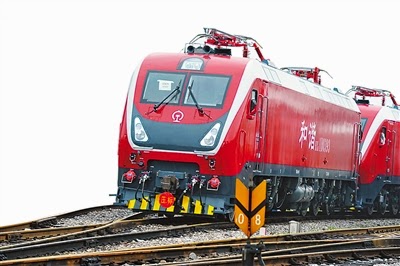
A new type of locomotive to be delivered by CSR Zhuzhou Electric Locomotive Co Ltd. (Xinhua Photo)

From selling equipment to selling technology, from one shot deals to winning repeat customers, CSR Corporation Limited is presenting the new image of "Made in China" to the world.

CSR Corp Chairman Zheng Changhong said Premier Li Keqiang has played the role of salesman for the high-speed train sector. Whenever he makes an overseas visit, he takes a model of the CHR 380A with him, a high-speed, multiple-unit train manufactured by CSR Qingdao Sifang Co. Nearly half of the high-speed trains in China are manufactured by Sifang. Premier Li has sold them to 12 countries. High-speed trains have become a "callingcard" for China.

From selling equipment to selling technology, CSR's "going global" program has steppedup a level. CSR won a $1 billion contract to provide an intercity train to Argentina in 2013.The first 54 cars have already gone into service in Buenos Aires, capital of Argentina. Lastmonth, Sifang dispatched more than 30 staff to Argentina, where it is providing technicalsupport and training under the terms of the contract. It shows the company's 'going global'program has moved from providing only products to providing a combination of products,services and technologies.

CSR won $3.76 billion in overseas orders in 2014, up 68.6 percent from the previous year.The Thai railway project and a high-speed project linking Singapore and Malaysia are inprogress. On March 14, China and Thailand signed an agreement relating to building arailway linking the two countries.

In March 2015, 95 locomotives produced with CSR Zhuzhou Electric Locomotivetechnology rolled off the assembly line in South Africa. South African President Jacob Zuma said CSR had made a significant contribution to success in local production and procurement, technology transfer, training of local staff, and other related areas.

Compared with international competitors, Chinese train producers have a clear advantagein terms of cost, delivery time, manufacturing capacity, and a complete product portfolio.

In 2014, South Africa CSR Zhuzhou signed a deal with South Africa for 359 locomotives,compared with a deal for 240 locomotives from Bombardier.

Innovation is the basis for brand development. Where there is no innovation in technologyand services, there is no viable brand, said Ding Rongjun, an academician of the ChineseAcademy of Engineering. CSR can no longer be considered to have mastery only offragmented rail technology, but of the entire technology system. This represents the startof the CSR brand, according to Ding Rongjun.

This article was edited and translated from 《中国南车 轨道上的“国家形象”》, source:People's Daily Overseas Edition

Related posts:

Thursday, 9 April 2015

Explore China - China May Build Railway to Nepal, with Tunnel Through Mount Everest

A passenger train travels the Qinghai-Tibet railway, about 100 km northwest of the city of Lhasa, in this file image from 2008. | JAN REURIK / CC-BY-SA-2.0
AFP-JIJI

BEIJING – China is considering building a railway to Nepal with a possible tunnel through Mount Everest, state media said Thursday, as Beijing courts a country India regards as firmly within its sphere of influence.

The Qinghai-Tibet railway already links the rest of China with the Tibetan capital Lhasa and beyond, and an extension running as far as Nepal’s border is already underway, the China Daily newspaper said.

It quoted a Tibet official as saying construction as far as the border will be complete by 2020. It also quoted an expert at the Chinese Academy of Engineering as saying the extension was made “at Nepal’s request.”

Chinese foreign minister Wang Yi visited Kathmandu in December and, according to Nepalese reports, said the line could eventually be extended to the Nepalese capital and further, potentially providing a crucial link between China and the huge markets of India.

Such a plan could see a tunnel being built under Mount Everest, the China Daily said.

“The line will probably have to go through Qomolangma so that workers may have to dig some very long tunnels,” expert Wang Mengshu told the newspaper, referring to Everest by its Tibetan name.

He said that, due to the challenging Himalayan terrain with its “remarkable” changes in elevation, trains on any line to Kathmandu would probably have a maximum speed of 120 kilometers per hour.

The proposal underscores China’s influence in the impoverished Himalayan nation, where Beijing has for years been building roads and investing billions of dollars in hydropower and telecommunications.

Chinese tourism to Nepal, which is home to eight of the world’s 14 peaks over 8,000 metres, is also climbing.

Beijing’s increasing role has raised alarms in New Delhi that China, already closely allied to Pakistan, is forging closer economic ties with Sri Lanka, the Maldives and Nepal in a deliberate strategy to encircle India.

In an apparent counter-move, Indian Prime Minister Narendra Modi pledged late last year that South Asia’s largest economy would fund a series of regional investments and free up its markets to its neighbours’ exporters.

But India has struggled to compete with China’s financial muscle.

Chinese plans to expand the rail network in Tibet have also come under criticism from rights groups including the International Campaign for Tibet, which has warned of the project’s “dangerous implications for regional security and the fragile ecosystem of the world’s highest and largest plateau.”

“The Chinese government’s claim that rail expansion on the plateau simply benefits tourism and lifts Tibetans out of poverty does not hold up to scrutiny and cannot be taken at face value,” ICT president Matteo Mecacci said in a statement last year. (Source - The Japan Times)


Did you know that Qinghai-Tibet Railway, China is one of the world's 20 most amazing engineering feats?

The Qinghai–Tibet Railway is the first railway to connect Tibet to any other province. The railway boasts the world’s highest track at the Tanggula Pass section, a staggering 5,072m above sea level. 

Constructing the railway at such altitudes, unsurprisingly, caused some problems, and air inside the train carriages is supplemented with extra oxygen to help keep passengers breathing normally.

Below are some amazing and breathtaking views of the Qinghai-Tibet railway, about 100 km northwest of the city of Lhasa.


A train travels on a bridge of the Qinghai-Tibet Railway above the Tuotuo River


Related post:


Wednesday, 8 April 2015

Spring Outing Photos of WUST Campus Belles Become Internet Hit

On April 2, 2015, dressing up with traditional Han clothing, four campus belles of Wuhan University of Science and Technology (WUST) went for a spring outing and posed for photos. 

Their photos have attracted much attention from university students and have become an internet hit.


(Photo source: cnhubei.com)

Source - people's daily online

Explore China - Wuhan’s Drive to Become China’s Car City

Assembly line at a General Motors auto plant in Wuhan. Photograph: STR/Getty

With good transport links and a cheap, well-educated labour force, Hubei’s provincial capital aims to corner the Chinese automobile-building sector

When Zhu Chun Quio first started out as a taxi driver in Wuhan more than 30 years ago, he remembers that there were 32,570 cars on the road, all Toyota Crowns. These days almost 2m cars clutter up the sprawling city’s thoroughfares. “At 9am we’re already bumper-to-bumper,” says Zhu, at the wheel of his C-Elysee, one of the models manufactured locally by Dongfeng Peugeot Citroen.

Wuhan, population 10 million, is a transport hub, and dreams of becoming the car city of the People’s Republic. The automobile industry represents 20% of the city’s economy, with 200,000 direct jobs and more than a million indirectly.

And Wuhan’s car industry is growing fast. General Motors and its Chinese partner, the Shanghai Automotive Industry Corporation, have launched a new plant capable of producing 240,000 vehicles annually. At the end of this year Renault will be rolling out an assembly unit. With the plants operated by the Dongfeng-PSA Peugeot Citroën joint venture and Honda, among others, the provincial capital will soon have about 10 car factories, producing more than 2m vehicles a year, in an area smaller than the Paris basin. In 2014 Wuhan was the world’s seventh-largest centre of automobile production, with 1.13m vehicles assembled, although Chongqing, which assembled 2.3m vehicles last year, tops the global rankings.

The most visible impact of this development is the congestion. Corinne Policisto, who works for Renault, first came to what seemed a pretty drab place in 1988. Returning in 2013, she was bewildered. “When I visited my old stamping ground near the university, it had all changed. In those days I could cycle around at 2am but I wouldn’t dare now, the traffic’s so crazy.”

Like much of the rest of China, Wuhan is seemingly one huge building site. In one direction a new development with 10 towers is going up, in the other an elevated urban highway. Not far off there is a new overground railway and beyond a vast mall. Not to mention thousands of homes. There are currently 11,000 building sites in the city. “It’s been chaos since they started building the subway five years ago,” Zhu says. In December 2014 a fourth new line opened and the city council has promised that by 2020 there will be 12. “There wasn’t much change in the 2000s,” says Liu Yi, a young PSA executive. “But in 2010 it all speeded up, with Beijing driving development.”

Wuhan cannot compete with the big cities on the coast, despite its efforts, but it has a prominent place in Chinese history. In the early 20th century the revolt that overthrew the Qing dynasty started here. During the war against Japan the town became a rear base for the authorities, and Mao Zedong liked to swim in the Blue river.


Employees inspect a C-Elysee in a plant operated by Dongfeng Peugeot Citroen in Wuhan, in Hubei province. Photograph: Shepherd Zhou/EPA
His successors launched the great offensive to give the country its own car industry. “The objective was to develop six large firms,” says Yin Xinmin, professor of economics at Fudan University, Shanghai. “To develop the automobile, it was necessary to create everything that gravitated around it. Hubei, with its capital Wuhan, was an ideal candidate, being one of the earliest industrial centres in China. The region is well-connected, thanks in particular to the Yangtze river.”

Second Automotive Works, which changed its name to Dongfeng in 1992, set up shop in Shiyan, in the mountains of Hubei, 450km from Wuhan. In 1990 the company started a joint venture with Citroën, opting to build its first civilian car plant at Wuhan, which was more accessible than Shiyan. Only in 2005 did Dongfeng move its headquarters to the city, by which time it was working with PSA, Honda, Nissan and Renault, giving ideas to the increasingly ambitious local authorities.

“Every city needs a champion. Wuhan stands out because Dongfeng is involved in more joint ventures with foreign firms than the other state-owned organisations,” says Jean-François Dufour, at the consultants DCA. “It’s an important company in China and it carries quite a lot of weight. For the local authorities, local manufacturers are crucial. It’s a matter of prestige, a source of potential revenue and above all jobs.”

To the west of the city, the economic and technological development zone hinges on “Dongfeng city”. The firm has given its name to all the streets round the head office: Dongfeng Road 1, 2, 3 and so on. There are six car factories in the vicinity, operated by PSA, Honda and, of course, Dongfeng.

“Dongfeng is looking out for us,” says Zhu. What with the workers on the assembly lines, in the hospitals, sports centres and housing complexes, everything in this part of Wuhan is Dongfeng. “They’re good employers, too,” Liu says. “The health cover and pensions are better than other companies.”

“It’s a good thing to have this firm here,” Zhu says. “There’s plenty of work and that brings in trade. Without them the city would never have developed so quickly. And you know, Xu Ping, the Dongfeng boss, is more important than the head of the city council.”

The provincial capital is also one of China’s largest university towns, with 1.3 million students. So there is a steady stream of eager young technicians and engineers. Labour costs are lower than on the coast too.

“For a long time the economy was a bit sluggish,” says the local head of a French equipment manufacturer. “But now it’s catching up lost time.” (
Source - theguardian.com)


There are 14 universities located in Hubei province. Below are some of the top universities located in Wuhan city and courses that are taught in English:


1. Wuhan University


Wuhan University, a key comprehensive university directly under the administration of the Ministry of Education of the People‘s Republic of China, is also among the key construction universities of the National "985 Project" and "211 Project". 

Wuhan University originated from Self-improvement School, which was founded in 1893 with the approval of the Qing Government by Zhang Zhidong, Governor of Hubei and Hunan Provinces in the late Qing Dynasty. After years of evolution, it was denominated as National Wuhan University in 1928, hence one of the first national universities in modern China. 

By 1946, the university had already developed into a comprehensive university with six disciplines: Liberal arts, Law, Science, Engineering, Agriculture and Medicine. The university has 37 schools and departments, and offers 124 ungergraduate programs, 347 graduate programs, and 243 doctoral programs,including 5 undergraduate programs and 6 master degree programs teaching in English.

Wuhan University enjoys rolling physical features with scenic Luojia Hill in its campus coverage and the beautiful East Lake by its side, beaming with picturesque glamour. It is honored as "the most beautiful university in China."

English-taught Programs

Bachelor

International Economy and Trade - 4 years duration with tuition fees of RMB 22,000 per year
Management - 4 years duration with tuition fees of RMB 22,000 per year
Economics - 4 years duration with tuition fees of RMB 22,000 per year
Software Engineering - 4 years duration with tuition fees of RMB 24,000 per year
Bachelor of Medicine, Bachelor of Surgery (MBBS) - 6 years duration with tuition fees of RMB 32,000 per year
Electronic Commerce - 4 years duration with tuition fees of RMB 32,500 per year
Water Conservancy and Hydropower Engineering - 4 years duration with tuition fees of RMB 24,000 per year
Media and Communication - 4 years duration with tuition fees of RMB 22,000 per year

2. Huazhong University of Science and Technology

Located in Wuhan, the capital city of Hubei Province in central China, Huazhong University of Science and Technology (HUST) is a national key university directly under the administration of Ministry of Education of P. R. China, and is among the first Universities joining the national “211 Project” and “985 Project”. 

HUST covers an area of over 1,153 acres with picturesque environment and elegant surroundings, and has 72% greenery coverage, which has been honored as the “University in the Forest”. 

HUST covers 12 disciplines: philosophy, economics, law, education, literature, history, science, engineering, agriculture, medicine, management and arts. The University offers 95 undergraduate programs, 224 master programs, 183 doctoral programs and 35 post-doctoral research centers, including 4 undergraduate programs, 81 master’s and 87 doctoral programs taught in English. 

HUST has been accepting international students since 1960s. For over 50 years it has cultivated more than 5000 international students from more than 130 countries and districts.


English-taught Programs

Bachelor

Telecommunications Engineering - 4 years duration with tuition fees of RMB 30,000 per year
Pharmacy - 4 years duration with tuition fees of RMB 35,000 per year
Nursing - 5 years duration with tuition fees of RMB 30,000 per year
Machine Design Manufacture and Automation - 4 years duration with tuition fees of RMB 30,000 per year
Bachelor of Medicine, Bachelor of Surgery (MBBS) - 6 years duration with tuition fees of RMB 40,000 per year

3. Wuhan University of Technology


Wuhan University of Technology, one of the key institutions of higher learning under the direct administration of China Ministry of Education, is included in Project 211 & Innovation Platform for Advantages Disciplines under Project 985. 

In 2012 WUT is ranked top 1% by Essential Scientific Index (ESI) of three disciplines of Materials Science, Engineering & Chemistry. By Times Higher Education in 2014 WUT is ranked 49th among Top 100 Asian Universities, and 301st -350th among Top 400 World Universities. 

WUT is accredited by the Ministry of Education, and merged from the former Wuhan University of Technology, Wuhan Transportation University and Wuhan Automotive Polytechnic University. The university could offer 11 disciplines of Engineering, Science, Management, Economics, Law and ects, and possesses State Key Laboratories. 

The university makes the target to become the research-oriented university, and try to improve itself in the whole to be the first class of China, and part the disciplines to be first class in the whole world.


English-taught Programs

Bachelor

International Economics and Trade - 4 years duration with tuition fees of RMB 18,000 per year
Industrial Engineering - 4 years duration with tuition fees of RMB 22,000 per year
Mining Engineering - 4 years duration with tuition fees of RMB 22,000 per year
Civil Engineering - 4 years duration with tuition fees of RMB 22,000 per year
Business Administration  - 4 years duration with tuition fees of RMB 18,000 per year

4. Central China Normal University


Central China Normal University (CCNU) was founded in 1903 and changed her name to Central China Normal University in 1985. Now, CCNU comprises 25 schools and departments, more than 60 research institutes (centers) , and offers 59 bachelor’s programs, and 94 doctoral programs and 184 master’s programs. 

CCNU also recruits international students. At present the university has a student body of over 30,000, of whom 8000 are postgraduates; more than 2700 are international students.


English-taught Program

Bachelor

Computer Science and Technology - 4 years duration with tuition fees of RMB 24,000 per year


5. China University of Geosciences


China University of Geosciences(CUG), founded in 1952,is one of "211"project universities affiliated with China Ministry of Education, and also is the research center and talent training base of Earth Sciences, Resources and Environment in China. 

It has formed a complete and optimized multidisciplinary system with characteristic of Earth Science, including disciplines of science, engineering, literature, management, economics, law, pedagogy, and philosophy. 

The University has integrated training system of undergraduate, master, and doctor, post-doctorate. CUG owns a set of national and provincial level key laboratories and engineering centers. The faculty members of CUG totals about 1300, among them 9 are Academicians of Chinese Academy of Science. 

CUG has completed teaching facilities, advanced research equipment, rich library and museum collections, convenient transportation and beautiful campus. It is one of national key comprehensive universities.


English-taught Program

Bachelor

Communication Engineering - 4 years duration with tuition fees of RMB 22,000 per year


Tuesday, 7 April 2015

Malaysia's Education - Investing More in The People

Malaysia has done well in gross enrolment ratio and university enrolments have shot up but there’s still a lot more investments needed
Emphasis on human capital development crucial for the country to boost productivity

WEAK crude oil prices have given Malaysia the opportunity to do away with the fuel subsidies late last year. But it is also now giving the country’s policymakers the opportunity to implement the changes that can make the economy more competitive and in the process raise incomes and living standards.

At the core of making the country’s economy more competitive lies human capital development. This is important given that Malaysia’s exports competitiveness lies in the manufacturing sector and not in the extraction of natural resources.

Gross manufacturing exports (including those derived from chemical, petroleum and rubber products) comprised nearly 77% of last year’s exports, of which 48.5% came from the electrical and electronic (E&E) subsectors.

Therefore, the country needs to move up the manufacturing value chain faster if its economy is to remain competitive. To do so, a skilled workforce is needed to adopt technology and knowledge for innovation that can then be translated to higher productivity. 


To read rest of the story of this section, please click this link - Investing more in the people

Future skilled workforce in Malaysia


At the heart of the transformation of the Malaysian economy is the quality of the workforce. It has stood up fairly well over the decades when the economy transformed to one increasingly based on low-end manufacturing, especially in the exports-reliant E&E subsectors from one largely reliant on tin and rubber exports.

However, the pace of transformation is vital because the low-cost model of making lower valued goods is not feasible as Malaysia aspires to a high-income nation by 2020. But employers perennially complain that there is a shortage of skilled workers, the mainstay of innovation and productivity.

Pentamaster Corp Bhd executive chairman Chuah Choon Bin tells StarBizWeek that quality engineers are needed for the E&E subsectors to be competitive. The Bayan Lepas, Penang-based company exports automated semiconductor equipment to China, the United States and Europe.

While Pentamaster today exports the goods to countries from which firms in the industry used to import from, Chuah cautions that local players and multinational firms cannot always rely on the low-cost based model to stay competitive. “Cheap doesn’t mean we can compete indefinitely, we need to instil the quality mindset and the Malaysian education system is lacking in this respect,” he says, pointing to Germany and Japan as good examples of how the education system has supported the creation of a skilled workforce.

An education system that can reliably supply a skilled workforce is important but as the most recent Programme for International Student Assessment (in 2012) administered by the Organisation for Economic Cooperation and Development (OECD) shows, even at the basic level, Malaysia is not faring well.

The assessment saw Malaysian 15-year olds ranking in the bottom third for mathematics, science and reading as well as for problem-solving skills. The OECD’s education and skills director Andreas Scheleicher had noted then that today’s “15-year-olds with poor problem-solving skills will become tomorrow’s adults struggling to find or keep a good job”.

He goes on to say that “policymakers and educators should re-shape their school systems and curricula to help students develop their problem-solving skills which are increasingly needed in today’s economies.”

Although access to education is not an issue, quality is. “Malaysia has done well in gross enrolment ratio and university enrolments have shot up, overtaking many countries including India but there’s still a lot more investments needed,” Basu observes.

The reluctance to participate in the Times Higher Education (THE) rankings and be scrutinised by the global academic community has not done much good, as the latest THE rankings again showed local universities’ lack of participation.

Indeed, several key issues were brought up in the World Bank’s December 2013 Malaysia Economic Monitor, among them being that the quality of education has not kept pace with its regional peers and the questionable quality of teachers.

The report says the disproportionate share of post-secondary graduates among the unemployed further suggests that the education system is not producing the skills sought by the labour market.

“Malaysia’s performance in standardised international student assessments is below what would be expected of a country with its income per capita or level of educational expenditures, and well below the performance of the high-income economies that Malaysia aspires to compete against for innovation and knowledge-based investments. Moreover, performance appears to have deteriorated over the past decade. The level of English proficiency is widely perceived to have declined over time, a hypothesis that is supported by data on English teacher proficiency,” the report’s author Frederico Gil Sander noted. 


Read rest of the story of this section here. Source - The Star

So education quality is an issue in Malaysia. There are plates full of private higher learning institutions established in Malaysia to take care of our tertiary needs. But the quality of some private colleges are the main concern. Also, the fees imposed are exorbitant high and not affordable to many.  

In addition, the general perception is there is no constant monitoring the quality, standard and performance of these private universities by the relevant authorities. Ask yourself, do you want to pay such a high tuition fee that do not commensurate with the standard of quality. Worse still, I seen many of these so called private university and colleges do not offer wholesome and fulfilling campus life while you are spending another memorable chapter of life in university.

With the high tuition fees, I also believe many parents use their life savings to support and finance their children education and many also resort to education loan to pursue their dream. If some of these private colleges close down due to financial constraint, what would happened if you are half way thru?

Well, weigh your study option well before it is too late. 

Study engineering courses like E&E, Manufacturing and Automation and other bachelor degree courses like MBBS, Business, Marketing, Logistics, IT, computer Science, etc in China can be very reasonable and affordable. The tuition fee is heavily subsidized by China government as these universities are fully funded and administrated by Ministry Education of China.

Why study Engineering in China? The benefit to study abroad in China can be summarized as follows:

  • Most affordable Engineering degree in the world
  • China is today the largest producer of engineering graduates in the world
  • The great educational infrastructure in Asia is available in China
  • A lot of big fortune 500 companies are garrisoning in China constantly
  • Complete program taught in English
  • Highly subsidized tuition, and hostel expenses
  • 3 star category hostels for international students
  • Easy visa
  • Teaching based on 'problem based learning' and also traditional method
  • High quality training by visiting faculties from Europe and USA
  • An opportunity to study Aeronautical Architecture, chemical mechanical, electrical automobile and Business Program
  • Fulfilling and colorful campus life 
Related stories:
1. Many colleges set to fail without funding
2. More Jobless Among Private Varsity Graduates
3. Course Fees of Engineering Degree In Malaysia Compared with China Universities 
4. Course Fees of Medical Degree In Malaysia Compared with China Universities